 A Guide to Flood Insurance in the DC Area
✉️ Want to forward this article? Click here.
This article originally ran on UrbanTurf in May 2018.
The District's location along two rivers and their confluence practically makes flooding a certainty. Given that, UrbanTurf explains in this article how DC-area residents can go about securing flood insurance.
Most homeowners' and renters' insurance policies do not cover flooding. The largest flood insurance policy provider is the federal government, via the National Flood Insurance Program (NFIP), and insurance companies are middle-men for NFIP policies. This is the case in DC and throughout most of Maryland and Virginia.
story continues below
loading...story continues above
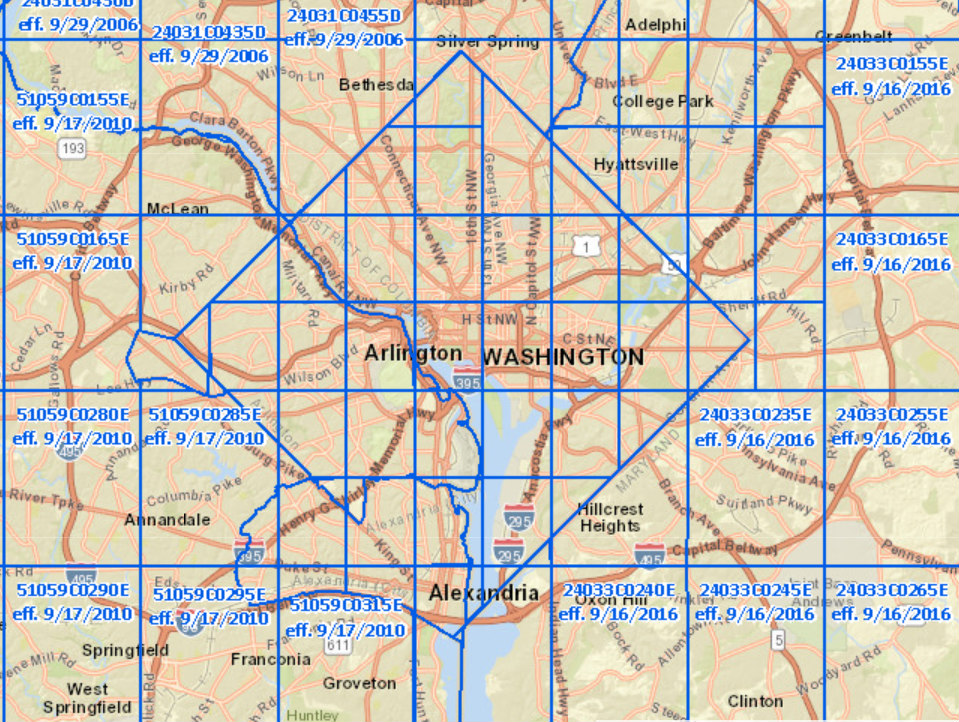
The NFIP calculates your flood insurance premium based on a variety of factors, the most important being a property's proximity to the floodplain. Since 2021, the NFIP has calculated premiums under a system called Risk Rating 2.0, which prices policies based on the specific characteristics of an individual property — including distance to water, flood frequency, elevation, foundation type, and the cost to rebuild — rather than which flood zone it falls in. That's a shift from the old system, in which two homes on the same block could pay very different rates simply because they sat in different zones on FEMA's Flood Insurance Rate Map.
Properties in high-risk flood areas, within the 100-year floodplain, require flood insurance of all mortgagees; in areas of low-to-moderate risk, or if a mortgage doesn't apply, such insurance is optional. Those who purchase insurance in optional zones can secure Preferred Risk Policies with lower premiums.
One can purchase a General Property Policy, which can cover five or more residential or non-residential buildings; a Residential Condominium Building Association Policy, which covers condos and townhouses; or a Standard Flood Insurance Policy, which is most commonly utilized and covers up to four individual units in multi-family buildings and single-family homes. The latter category offers either building property coverage of up to $250,000 or personal property coverage of up to $100,000; one can also purchase both.
Contents-only policies for renters start at around $100 a year, and buyers can choose to insure belongings at replacement cost or actual cash value (which factors in depreciation). For policies that include building coverage, the national average premium is now over $1,000 a year, though costs vary widely by state and by a property's individual risk profile — homes in high-risk zones can run considerably higher. Contact your preferred insurance provider for a quote — and be sure to look up whether your home is in a high-risk area.
See other articles related to: flood insurance in dc, flood risk, flood zone, flooding, flooding in dc, floodplain
This article originally published at https://dc.urbanturf.com/articles/blog/a-guide-to-flood-insurance-in-the-dc-area/18658.




UrbanTurf Listings showcases the DC metro area's best properties available for sale.

Most Popular... This Week • Last 30 Days • Ever

From the Maryland line down to the edge of downtown, a mix of office conversions, inf... read »

Dulles International Airport is slated for its biggest transformation since it opened... read »

Close-in suburbs are seeing some of the steepest rent declines in the region, while s... read »

Bloomberg reported this week that Apple is preparing its biggest-ever push into the s... read »

The happiest cities; High Street Residential unloads Brookland building; and a London... read »







DC Real Estate Guides
Short guides to navigating the DC-area real estate market
We've collected all our helpful guides for buying, selling and renting in and around Washington, DC in one place. Start browsing below!
First-Timer Primers
Intro guides for first-time home buyers
Unique Spaces
Awesome and unusual real estate from across the DC Metro
