 First-Timer Primer: Understanding the 1031 Exchange
✉️ Want to forward this article? Click here.
This article originally ran on UrbanTurf in 2017.
Today, UrbanTurf will explain how a 1031 exchange works and how property owners can use it.
A 1031 exchange, so-named after its corresponding section of the IRS code, enables people who own investment properties to avoid tax liability upon trading up to a property of equal or greater value and equity.
Also known as a Starker Exchange, the tool allows the owner to defer paying a capital gains tax on a “like-kind property”, meaning that the property must be of the same category. For example, a multi-family building can be sold to purchase another multi-family building — or even several houses.
story continues below
loading...story continues above
While the ideal 1031 exchange would involve two parties swapping properties, this is rare in practice. More commonly, exchanges are delayed, where the property owner works with a qualified intermediary to sell their property and purchase another within 180 days.
The 1031 exchange also enables the owner to leverage the value and equity of a property. Without using a 1031, any sale of an investment property will incur a capital gains tax regardless of whether a profit was made.If the newly-purchased property is of lesser value or cost than the one that is sold, the owner will have to pay capital gains tax on the “boot”, or the difference in value between the two.
There are two other types of exchanges in addition to swaps and delayed exchanges: reverse and improvement. Reverse exchanges involve an all-cash purchase of a property under an incorporated name prior to sale of the first property. Improvement exchanges occur when the newly-purchased property costs less than the sold one and the difference is used to build on or improve the former.
The provision does not apply to primary residences, nor most vacation homes or flips. All exchanges must also be under the name of the same taxpayer or accounted for on the same tax return.
See other articles related to: first-timer primer, tax tips, taxes
This article originally published at https://dc.urbanturf.com/articles/blog/first-timer_primer_how_to_use_a_1031_exchange/12692.




UrbanTurf Listings showcases the DC metro area's best properties available for sale.

Most Popular... This Week • Last 30 Days • Ever
A look at the many reasons that prospective homebuyers seeing varying quotes for a 30... read »

Today, UrbanTurf takes a look at the large residential developments in the works for ... read »

Amazon pays up for skipping Wards 7 and 8; IKEA pulls out of Georgetown and Fairfax; ... read »

The new homes at The Grove at Spring Valley boast five bedrooms, six-and-a-half bathr... read »

Poplar Point's spa resort moves forward; a U Street Ethiopian institution shutters; a... read »




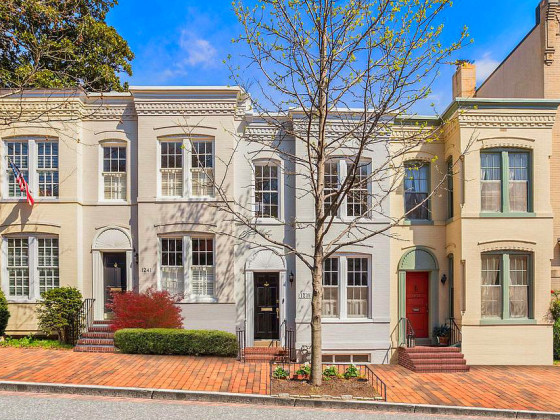




DC Real Estate Guides
Short guides to navigating the DC-area real estate market
We've collected all our helpful guides for buying, selling and renting in and around Washington, DC in one place. Start browsing below!
First-Timer Primers
Intro guides for first-time home buyers
Unique Spaces
Awesome and unusual real estate from across the DC Metro
