 The Increasingly Common Escalation Clause
✉️ Want to forward this article? Click here.
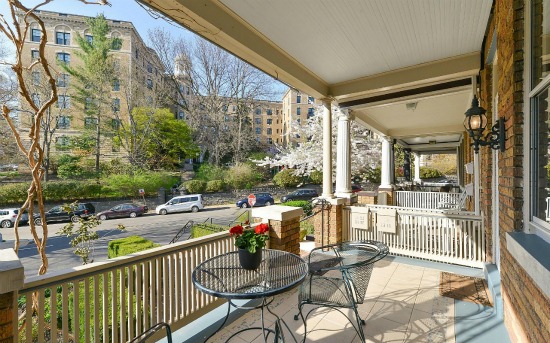
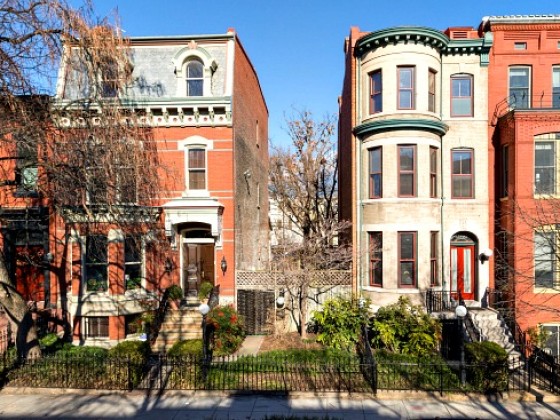
1814 Ontario Place sold on May 22 for $174,500 over asking.
The last time realtor Jen Angotti wrote an offer without an escalation clause, it was for a house that wasn’t even on the market.
“Otherwise, every offer I’ve written this year has had an escalation clause and competed against multiple offers,” Angotti, who works with DCRE Residential, said.
In 2011, UrbanTurf featured escalation clauses as one of several “lesser-known” ways to make an enticing offer. Now, they’re ubiquitous at most price points in the region.
story continues below
loading...story continues above
An escalation clause is an optional part of an offer to buy a home that states the buyer will increase their offer by a certain dollar amount over a higher bid — but usually no higher than a stated amount called the “escalation cap.” The clause is only triggered by a competing offer.
Angotti mostly works with buyers looking in the $650,000-$800,000 range for their first home — a fact that’s “a little bit crazy” on its own, she said. She’s watched the typical escalation cap move dramatically in the last year alone.
“Since last year, escalating $25,000 to $30,000 over is just not sufficient,” she said. “For houses in the $600,000-$700,000 range, you need to have an escalation cap that’s $50,000 over the offered price — at least.”
She said that’s particularly true in Cleveland Park and Capitol Hill. Buyers there are house-hunting in a market so competitive that some “just don’t know what they’re going to do.”
At higher price ranges in DC, where many buyers are competing with more cash on hand, escalation clauses get more strategic. The dollar increments that a buyer decides to escalate can play a role in whether or not they win a house, Compass’ Catherine Czuba told UrbanTurf. Escalation clauses may jump a price by $2,000 over a competing bid to win a house. But in the $1 million-plus price range, that may not be enough.
“Let’s say you have an offer that has a closing date that really works for a seller, and the next offer up only raises the deal by $2,000,” Czuba said. “The seller might take the lower offer. But if the clause escalated by $10,000, that may give a seller something to think about.”
See other articles related to: escalation clause
This article originally published at https://dc.urbanturf.com/articles/blog/the_increasingly_common_escalation_clause/9939.




UrbanTurf Listings showcases the DC metro area's best properties available for sale.

Most Popular... This Week • Last 30 Days • Ever
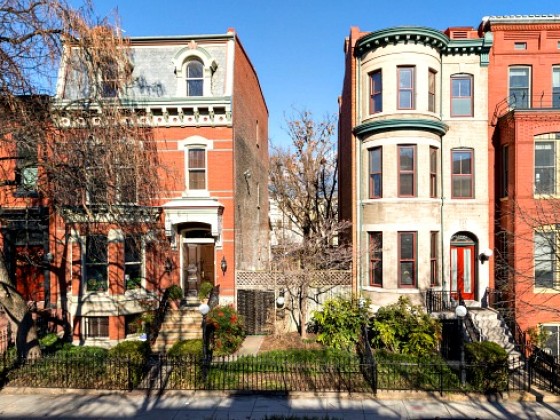
In this edition of First-Timer Primer, we review five potential red flags you may enc... read »
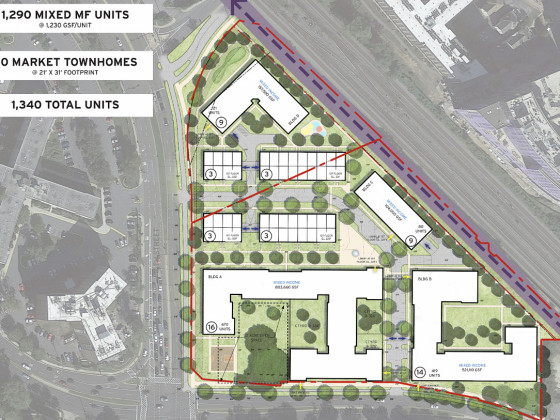
Plans are in the works for the largest mixed-use development in downtown Silver Sprin... read »
Buchanan Partners has filed plans to convert the nearly 23-acre Corporate Boulevard o... read »
Trump's DC arch hits an early legal snag; a stalled 19th Street office conversion get... read »

A.I. real estate listings; another DC project looks for an extension; and "hands of H... read »






DC Real Estate Guides
Short guides to navigating the DC-area real estate market
We've collected all our helpful guides for buying, selling and renting in and around Washington, DC in one place. Start browsing below!
First-Timer Primers
Intro guides for first-time home buyers
Unique Spaces
Awesome and unusual real estate from across the DC Metro
